The general goal of cancer treatment is to stop or slow the progression of the disease. Better still, in some cases, the goal of treatment is to eliminate (cure) the cancer.
In real-time, things are more complex. There are more than 100 types of cancer (not including subtypes). And each requires a unique treatment approach. No one can replace your healthcare provider’s guidance when it comes to explaining your options if you’ve just learned you have cancer. But a general understanding of the types of cancer treatments available and what’s involved may help.
What guides cancer treatment decisions?
Cancer specialists (oncologists) base treatment decisions on:
- The type of cancer.
- The cancer stage, or how advanced it is (the extent of the disease).
- How “aggressive,” or fast-growing, the cancer is.
- Your overall health and whether you can handle treatment (including your likely response to treatments).
- Treatment goals, which may include getting rid of the cancer or helping you live longer and more comfortably (palliative care).
Understanding the rationale behind the treatment plan your healthcare provider recommends is just as important as understanding the plan itself.
What are the types of cancer treatment?
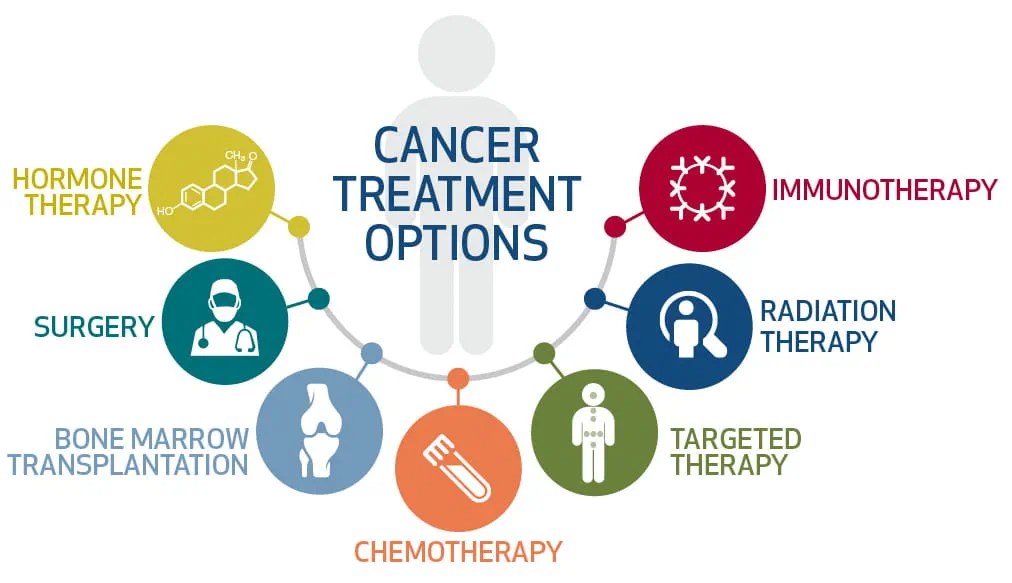
Healthcare providers may recommend one or (more commonly) a combination of cancer treatments, including:
- Surgery.
- Radiation therapy.
- Chemotherapy.
- Hormone therapy.
- Immunotherapy.
- Targeted therapy.
- Ablation.
- Bone marrow transplant.
- Clinical trials.
Surgery
Usually, the goal of surgery is to remove all cancer cells and some of the surrounding healthy tissue (a margin). Afterward, a pathologist tests the healthy tissue to ensure no cancer cells remain.
Surgery is the most common treatment for cancer that hasn’t spread (metastasized). It’s also the most effective for sending cancer into remission (no signs or symptoms of cancer). But this depends on whether your surgeon can safely remove the entire tumor. For example, surgery may not be a safe option if a tumor is embedded inside a vital organ or tangled in major blood vessels. And surgery can’t get rid of blood cancers or cancers that have spread.
Radiation therapy
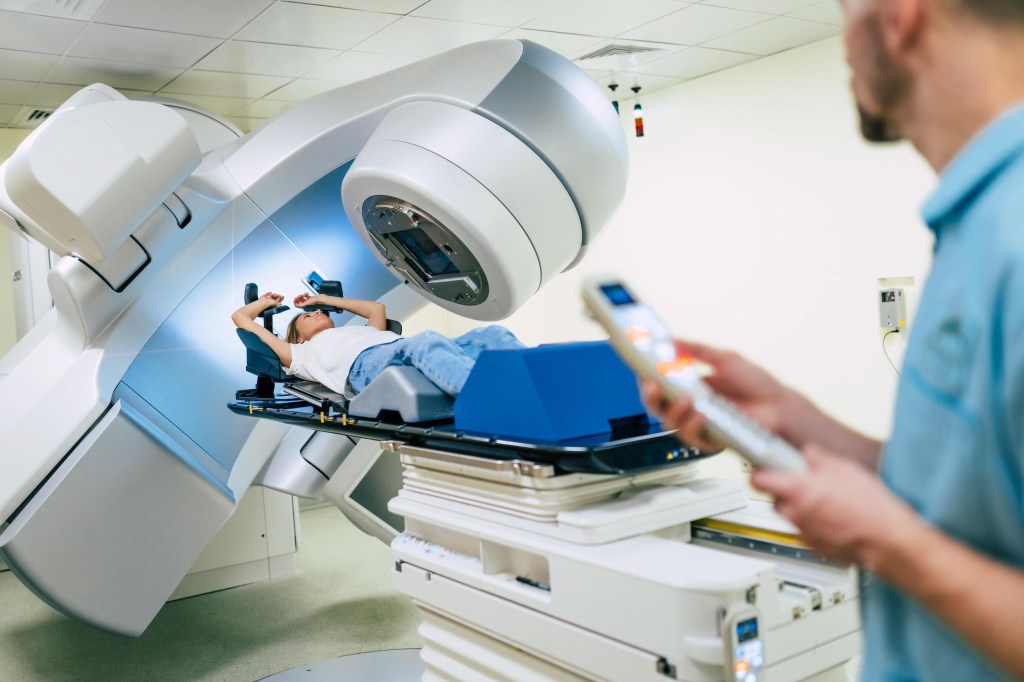
Radiation therapy uses high doses of radiation to destroy cancerous tumors. The radiation causes cancer cells to break down and die. Types include:
- External beam radiation therapy (EBRT): Uses a machine outside your body to direct radiation toward a tumor.
- Internal radiation therapy: Uses radioactive implants (often tiny pellets) on or near a tumor to kill cancer cells. Radiation therapy can also be given intraoperatively (during surgery).
- Hyperthermia therapy: Uses heat to kill cancer cells and make tumors smaller. It can also make other cancer treatments more effective.
Healthcare providers sometimes use radiation treatment only. Or you may receive radiation in combination with other treatments, like chemotherapy. Often, people get this treatment after surgery to destroy any remaining cancer cells.
Chemotherapy
Chemotherapy (or “chemo”) uses chemotherapy drugs to kill cancer cells. These drugs travel through your bloodstream, destroying fast-growing cells — like cancer cells — along the way. Less common types go directly into the part of your body with cancer cells. For example, surgeons sometimes inject chemo drugs directly into the body cavity with cancer or into the artery supplying a tumor.
Like radiation, you usually get chemo in combination with other treatments. You may get a single chemo drug or you may need different ones. Chemotherapy is one of the most common and effective treatments for cancer that has spread (metastasized), returned (recurred) or is likely to come back.
Hormone therapy
Hormone therapy blocks or reduces hormones that fuel cancer cell growth. Some cancers grow more rapidly in the presence of sex hormones, like androgens or estrogen. If your healthcare provider suspects your cancer is responsive to hormones, they’ll check the cells for sites where hormones can bind (hormone receptors). If you have hormone receptor-positive (HR+) cancer, you may need this type of cancer treatment.
Providers treat some types of prostate cancer, breast cancer and gynecological cancers (uterine and ovarian cancers) with hormone therapy.
Immunotherapy
Immunotherapy helps your immune system identify and destroy cancer cells. Healthy immune systems do a good job of identifying threats, like germs, and getting rid of them. Cancer cells thrive because they can hide from your immune system, so your immune system doesn’t attack the cancer cells. Immunotherapy can keep cancer cells from escaping your body’s natural defenses.
Healthcare providers most often use this in combination with other cancer therapies to treat advanced or recurrent cancer. Some of the most promising research into future cancer treatments involves testing and developing new immunotherapy treatments.
Targeted therapy
Targeted therapy treatments interfere with specific processes that allow some cancer cells to thrive. Cancer cells develop and multiply because of genetic mutations (changes) in their DNA. The mutations often cause cancer cells to make abnormal proteins that spur cancer cell growth. Targeted therapy drugs home in on the specific proteins, preventing them from fueling cancer cell growth.
You may get this type of treatment if you have cancer cells with certain mutations. Scientists continue to develop new targeted therapies as they learn more about the mutations unique to various cancer types.
Ablation therapy
Ablation therapy uses extreme hot or cold energy to kill cancer cells. Some types are called “surgery” because although there aren’t physical cuts, the methods allow providers to remove tissue with near-surgical precision. These include:
- Cryoablation: Uses intense cold to freeze and destroy cancer cells. It’s also called cryotherapy or cryosurgery.
- Laser therapy: Uses hot, high-powered light beams to cut out cancer cells. It’s also called laser surgery.
- Electrosurgery: Uses powerful electrical currents to remove cancer cells or destroy tissue. Examples include fulguration (radiofrequency ablation) and microwave ablation.
Healthcare providers most often use ablation to shrink tumors. This can relieve symptoms or help you live longer.
Hemopoietic stem cell (bone marrow) transplant
A stem cell transplant replaces immature blood cells that are (or could become) cancerous with healthy cells. There are two main types:
- Autologous: Uses healthy stem cells from your own body to replace cancerous or damaged ones.
- Allogeneic: Replaces your stem cells with those from a donor. The donor must have blood similar to yours, which means donors are usually close relatives.
Healthcare providers use stem cell transplants to treat blood cancers that haven’t responded to other treatments or that have returned after remission. You may need a transplant to replenish your blood cells after receiving treatments that destroy cancerous stem cells, like radiation and chemotherapy.
Clinical trials
A clinical trial is a study that tests the safety and effectiveness of new cancer treatments. Current treatment approaches and medications that are now considered best practice were once only available in clinical trials.
Your healthcare provider may recommend you take part in a clinical trial if standard therapies haven’t helped or aren’t an option. They may feel that a newer treatment may be more effective given emerging research about your cancer type.
Treatment Details
What happens during cancer treatment?
Cancer treatment usually involves a main treatment and additional ones. Here are some terms you may hear your provider use:
- Primary treatment: This is the main cancer treatment. The most common primary treatment for tumors that haven’t spread is surgery. But your primary treatment depends on lots of factors, including your cancer type and stage.
- Adjuvant therapy: This treatment is an additional therapy given after your primary treatment to help prevent or reduce the risk of cancer coming back.
- Neoadjuvant therapy: You receive neoadjuvant therapy before your primary treatment. It usually involves treatments like chemo and radiation that shrink tumors before surgery.
Your healthcare provider may use words like “local” or “systemic” to describe the cancer treatments you’ll need. Here’s what these words mean:
- Local treatments remove tumors or destroy cancer cells in a specific part of your body (“locally”).
- Systemic treatments destroy cancer cells that have broken off from the primary tumor (the place where the cancer starts) and spread. This includes advanced cancers that have spread to distant body parts (metastatic cancer).
How will I receive cancer treatment?
Cancer treatment may involve surgery or other procedures that target cancer cells:
- Open surgery: Major surgery that uses large cuts to access organs and body cavities.
- Laparoscopy: Minimally invasive surgery that uses smaller cuts than open surgery.
- Precision technologies: Radiation and ablation delivery methods that can deliver targeted energy that kills cancer cells while sparing nearby healthy tissue.
Cancer therapy also involves medicines that you may take:
- Orally: A pill, capsule, tablet or liquid you swallow.
- Topically: A cream you apply to your skin.
- Intravenously (IV): Through a vein that allows the medicine to get released slowly into your bloodstream. This type is also called an infusion.
- Injection: A shot that goes directly into tissue.
How long will I need cancer treatment?
The duration of cancer treatment can be definite (with a clear endpoint) or indefinite (ongoing). Definite duration usually happens when the goal of treatment is to cure the cancer. Ongoing treatment usually involves cancers that aren’t curable. Sometimes, ongoing treatment is about providing symptom relief. Treatment may continue until you can’t tolerate the side effects, or the treatment stops working.
Cancer treatment may be a one-time surgery or it may require many treatments. The most common cancer treatments are a “course of treatment” that involves multiple treatment sessions.
For example, your oncologist may tell you that you need several “rounds” or “cycles” of chemo. This means you’ll have several treatment days followed by recovery days. This on-again/off-again schedule gives the medicine time to work while allowing your body time to heal.
Ask your healthcare provider what your course of treatment will involve, including how long before you’ll know if it’s working.
When To Call the Doctor
When should I call my healthcare provider?
Call your provider if you’re experiencing new or worsening symptoms during cancer treatment. In some cases, they’ll advise you on how to manage them. Or they may need to change your dosage or even the type of cancer treatment.
Regardless, your provider not only needs to know how your treatment is working but also how it’s impacting your overall sense of well-being. Maintaining your quality of life is an essential part of your treatment.


Leave a Reply